

TL;DR
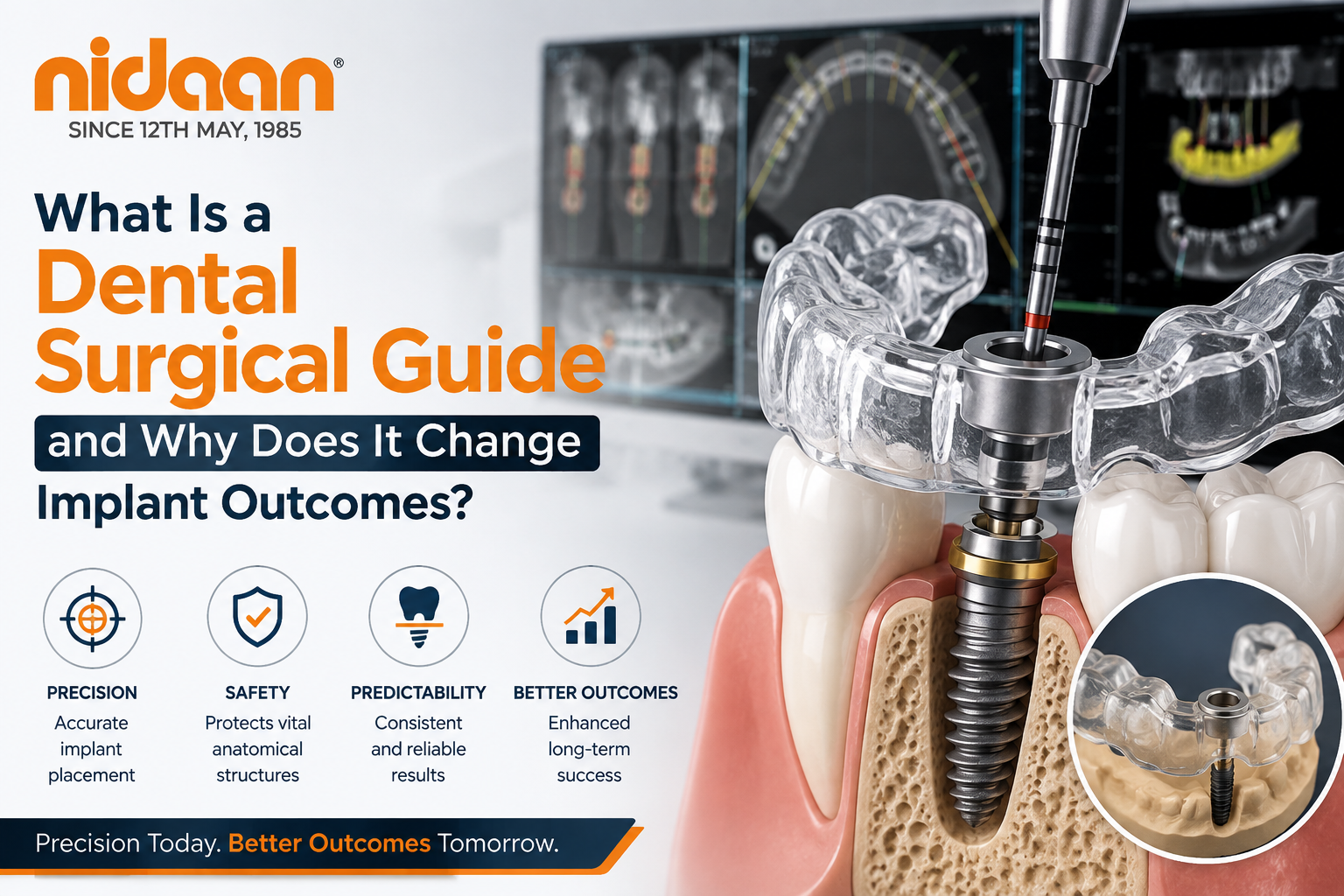
- A dental surgical guide is a patient-specific template used during dental implant surgery to accurately transfer a digitally planned implant position into the patient’s mouth.
- It helps control the implant’s entry point, angulation, depth, drilling path, and prosthetic position, making implant placement more precise and predictable.
- Surgical guides improve the accuracy of implant placement and support prosthetically driven planning, but they do not guarantee implant survival or eliminate complications.
- They are particularly valuable for multiple implants, full-arch restorations, esthetic-zone implants, immediate loading, and anatomically complex cases.
- Modern guided implant surgery combines CBCT scans, intraoral scans, digital implant planning, and CAD/CAM fabrication to create customized surgical guides.
- Long-term implant success still depends on proper diagnosis, bone quality, surgical expertise, prosthetic planning, oral hygiene, and regular maintenance.
Direct Answer
A dental surgical guide is a customized template, created from CBCT imaging and digital implant planning, that helps dentists place dental implants in the planned position before surgery. Instead of estimating implant location during the procedure, the guide directs the drills and implant according to the digital treatment plan, improving placement accuracy and supporting better prosthetic outcomes. However, a surgical guide is a precision aid, not a replacement for clinical expertise or comprehensive treatment planning.
If Implant Surgery Is Planned Digitally, Why Is a Surgical Guide Still Needed?
Many people assume that once a dentist has planned an implant on a computer, the difficult part is over. But digital planning alone doesn’t place an implant. The real challenge is transferring that precise virtual plan into your mouth during surgery without compromising the surrounding bone, adjacent teeth, nerves, or the position of the future crown.
Even a slight deviation of a few degrees can affect how the final restoration fits, how chewing forces are distributed, or whether important anatomical structures are avoided. This is where a dental implant surgical guide becomes valuable. Rather than replacing surgical skill, it acts as a bridge between digital planning and clinical execution, helping clinicians reproduce the planned implant position more accurately during the procedure.
As implant dentistry has become increasingly digital, clinicians are moving away from “bone-driven” implant placement and toward prosthetically driven implant planning, where the final crown determines the ideal implant position before surgery even begins.
As Dr. Daniel Buser, Professor of Oral Surgery at the University of Bern and one of the world’s leading implant researchers, explains:
“Backward planning from the final restoration is one of the key principles of modern implant dentistry.”
That philosophy is exactly what guided surgery is designed to support.
What Is a Dental Surgical Guide?
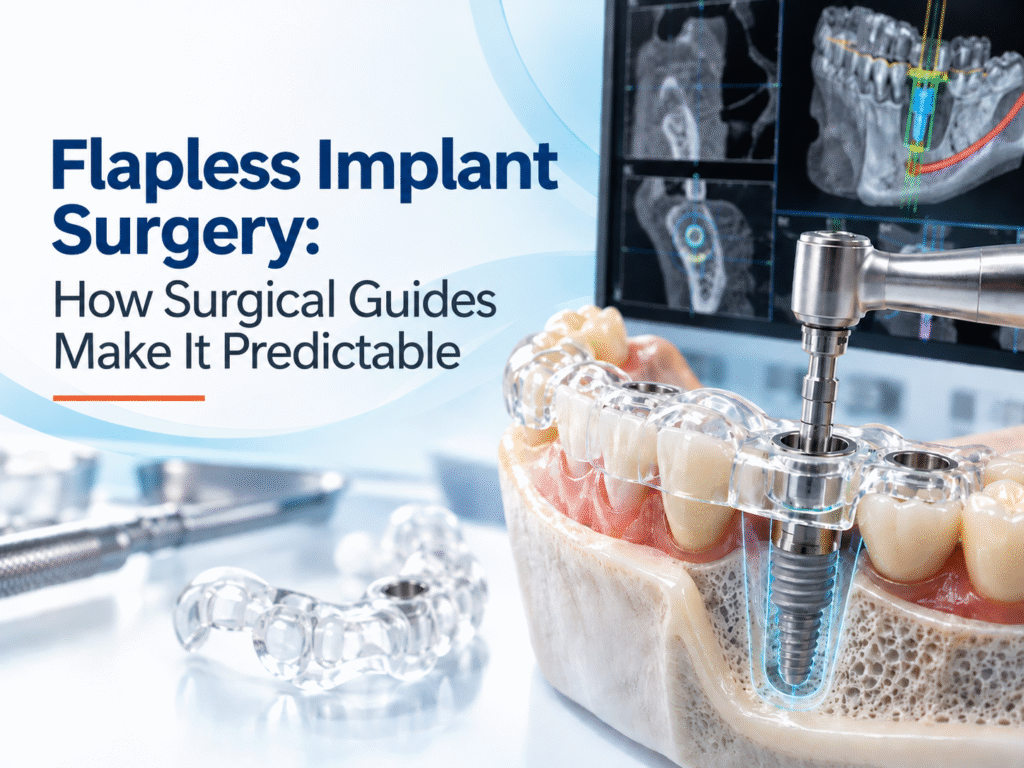
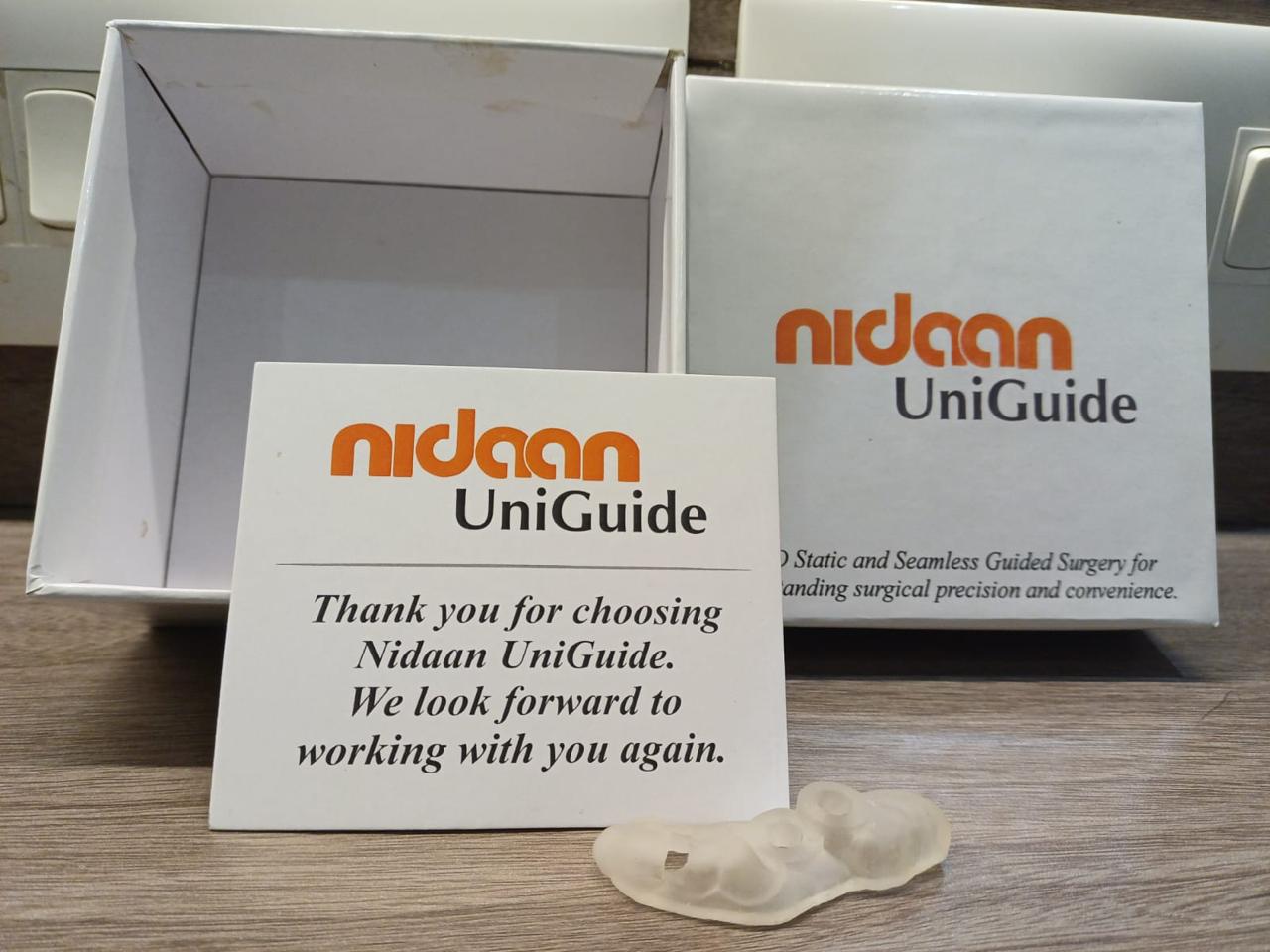
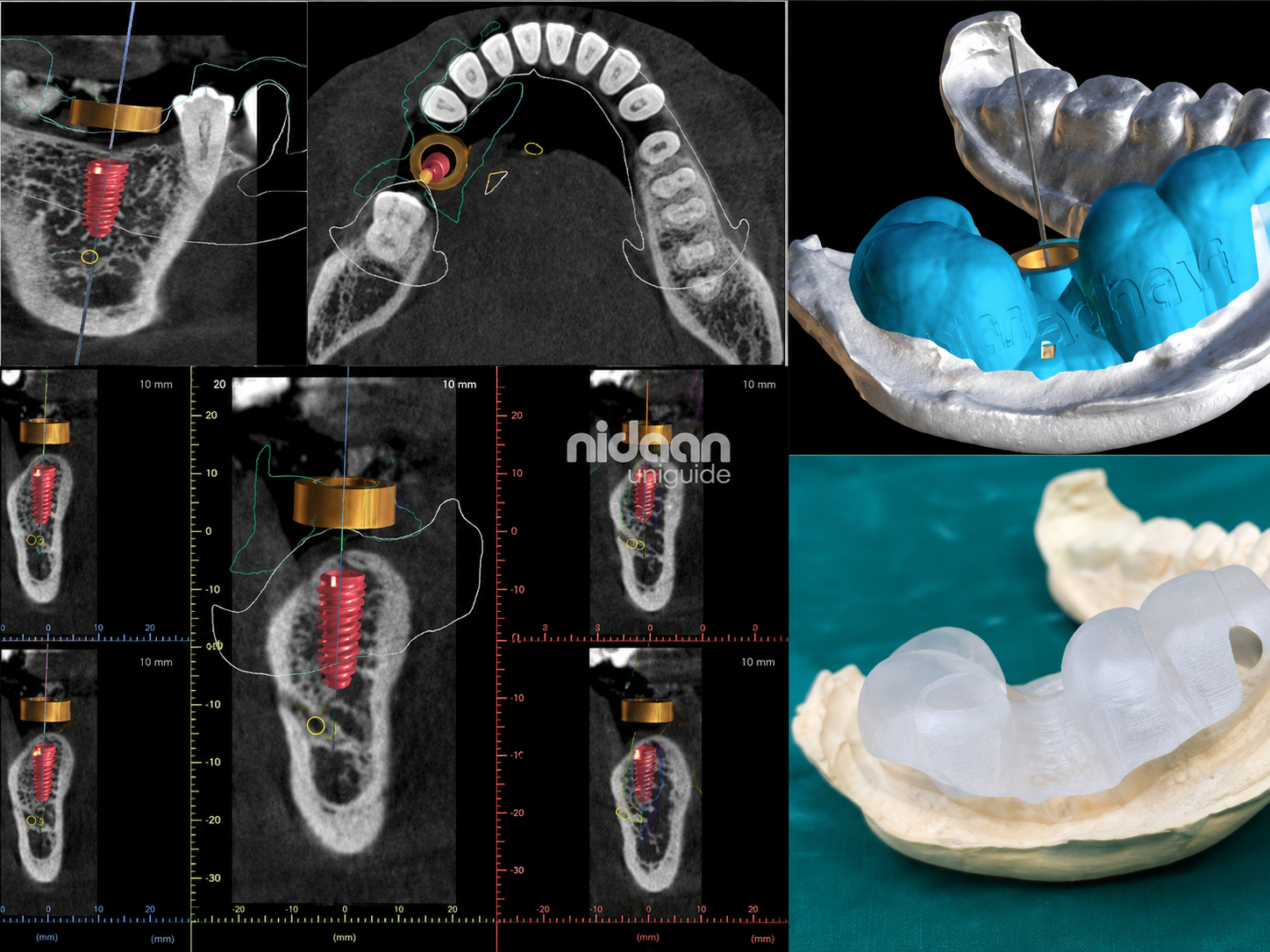
A dental surgical guide is a custom-made device that fits securely over a patient’s teeth, gums, or bone during implant surgery. It contains precisely positioned guide sleeves that direct the surgical drills in accordance with the digital treatment plan.
Rather than relying entirely on freehand estimation, the guide helps the implantologist maintain the planned position throughout surgery.
Modern computer-guided implant surgery typically combines:
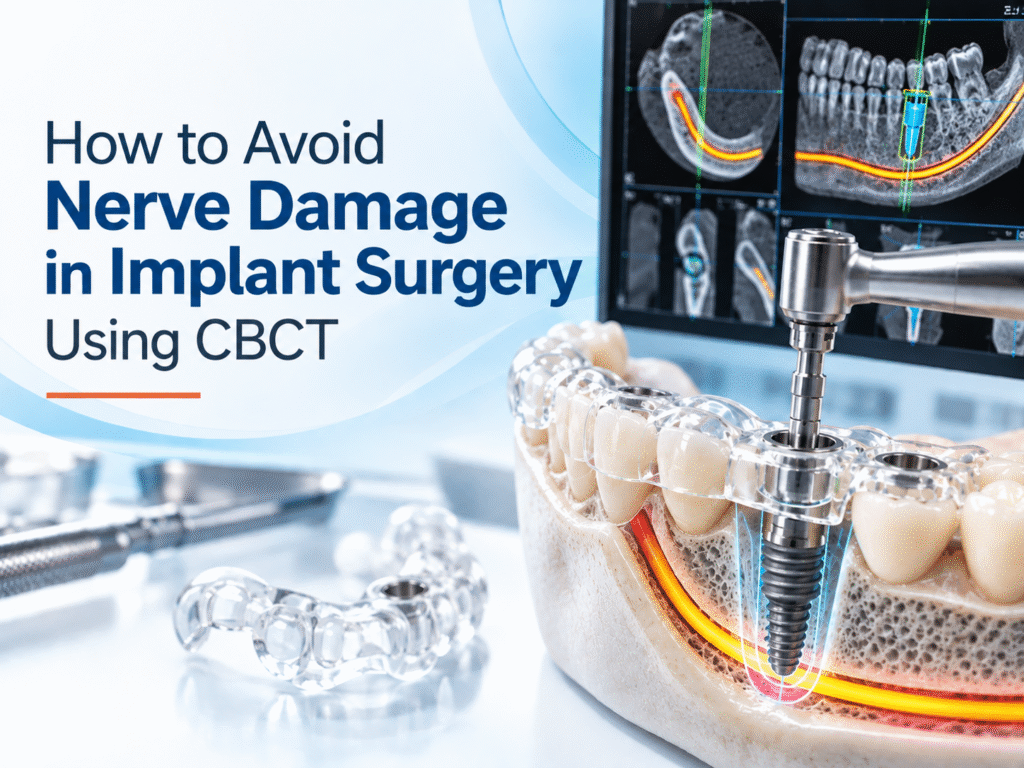
- CBCT scans for three-dimensional bone assessment
- Intraoral digital scans for accurate tooth and soft tissue records
- Digital implant planning software
- CAD/CAM manufacturing
- 3D printing or precision milling
Together, these technologies create a guide that reflects the patient’s unique anatomy and the planned prosthetic restoration.
The primary purpose of a surgical guide is not to make implant surgery “automatic.” Its greatest value lies in accurately transferring a carefully designed treatment plan into clinical reality, which research consistently identifies as its strongest advantage.
How Does a Surgical Guide Work?
Although the final guide looks simple, creating it involves several carefully coordinated digital steps.
Digital Planning Begins with Diagnosis
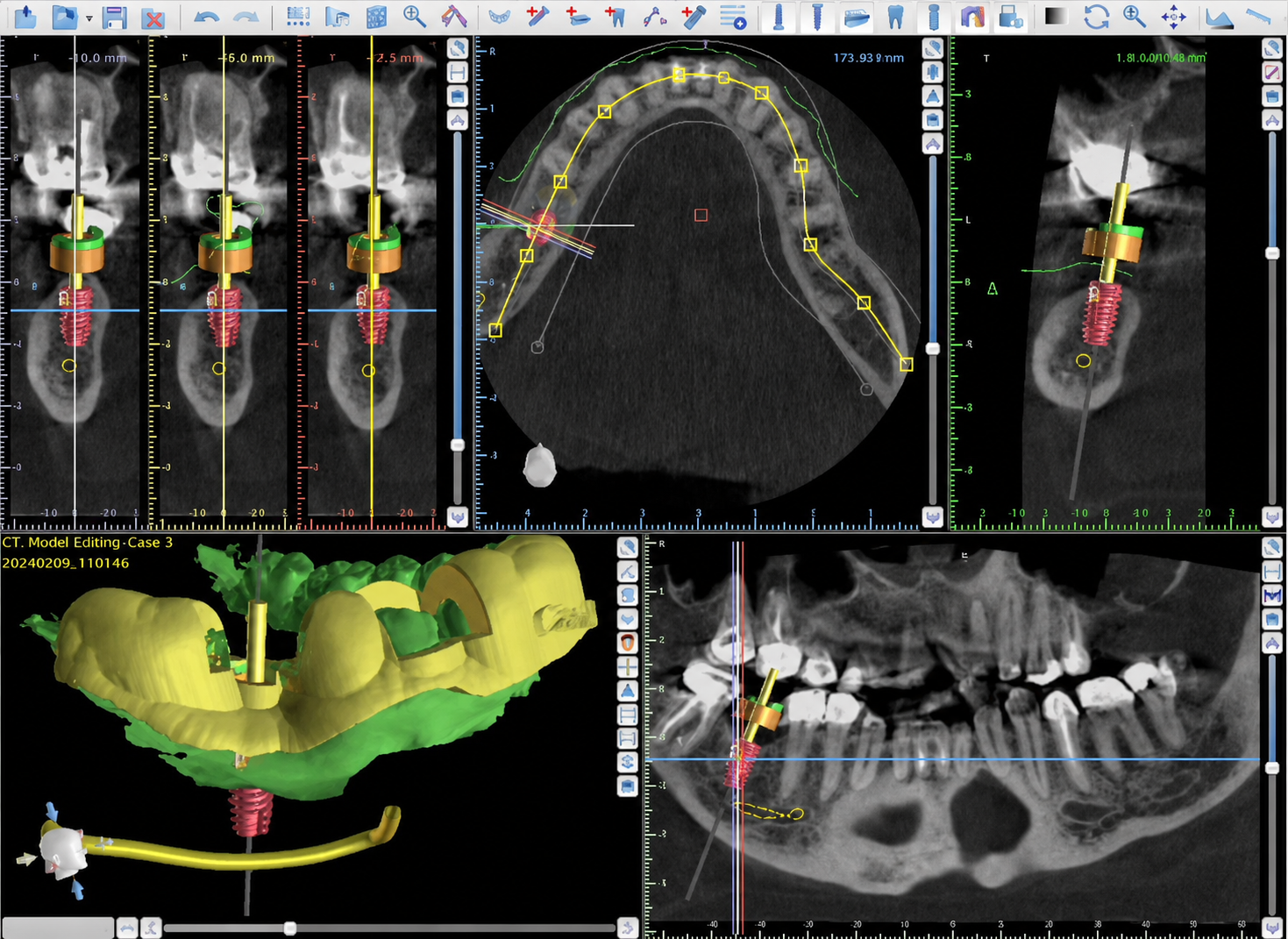
Everything starts with understanding your anatomy. A CBCT scan provides detailed three-dimensional information about:
- Bone height
- Bone width
- Nerve pathways
- Sinus anatomy
- Adjacent teeth
- Available implant space
An intraoral scanner then captures the exact position of your teeth and soft tissues.
These datasets are combined inside digital planning software, allowing the implant to be positioned based on the future crown rather than simply the available bone. This restorative-first approach helps improve both function and aesthetics.
Guide Fabrication
Once planning is complete, the virtual design is converted into a physical guide.
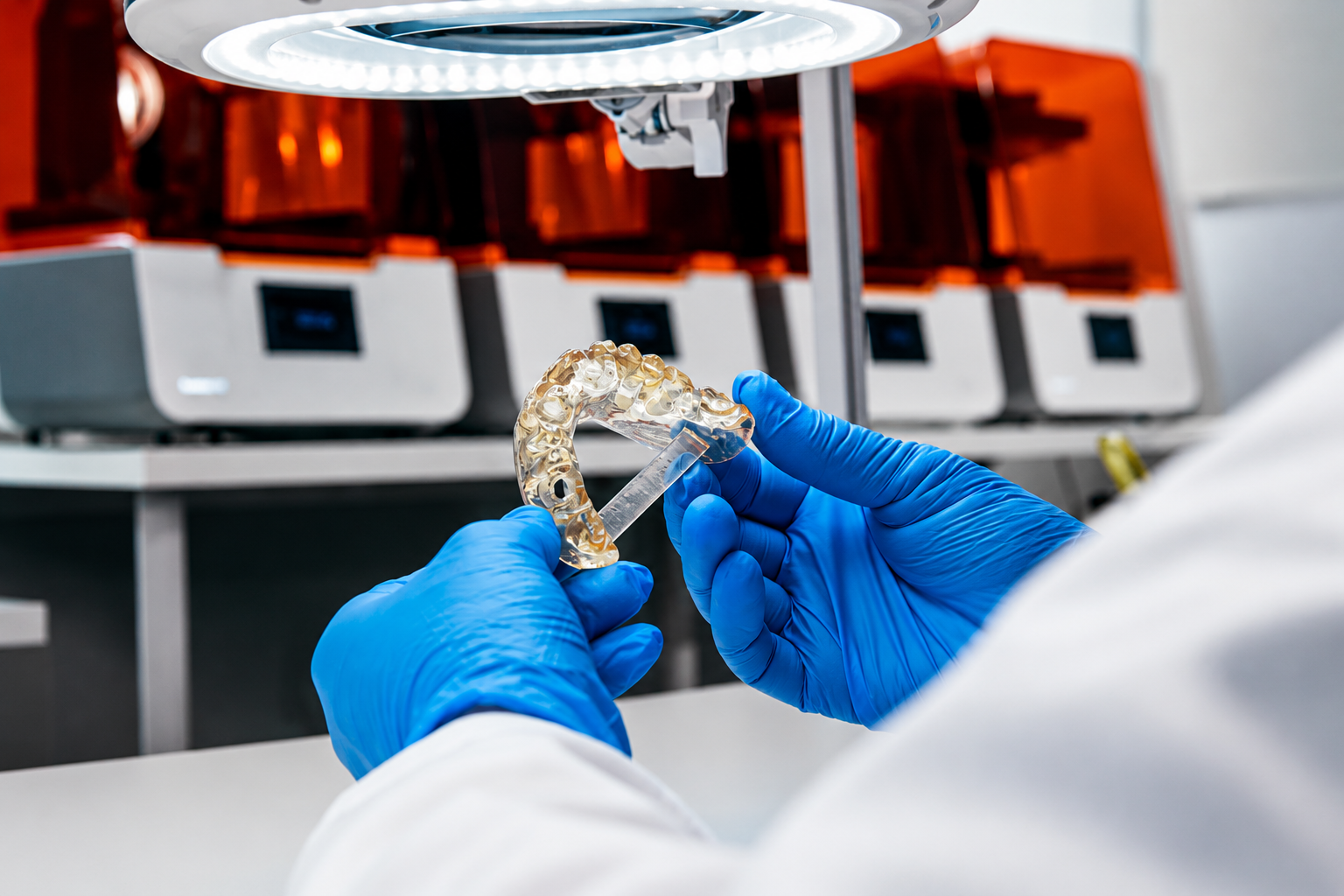
Most modern guides are manufactured using:
- High-precision 3D printing
- CAD/CAM milling
- Metal or reinforced guide sleeves
Each guide is unique because it is fabricated specifically for one patient’s anatomy and treatment plan.
Guided Implant Surgery
During surgery, the guide is carefully seated and verified for stability.
The drill passes through the guide sleeves, helping control:
- Entry point
- Drilling direction
- Implant angulation
- Drilling depth
- Parallelism between multiple implants
The result is a procedure that closely follows the digital plan created before surgery rather than depending entirely on intraoperative estimation.
What Does a Surgical Guide Actually Control?
One common misconception is that a surgical guide “places the implant.” It doesn’t. The implantologist still performs every surgical step and makes all clinical decisions. The guide simply helps maintain accuracy where precision matters most.
| Surgical Element | How the Guide Helps |
| Entry Position | Helps initiate drilling at the planned implant site. |
| Implant Angle | Maintains the planned angulation to support the future restoration. |
| Implant Depth | Assists in controlling drilling depth according to the digital plan. |
| Drill Direction | Reduces unintended deviations during osteotomy preparation. |
| Multiple Implant Alignment | Improves parallel positioning, particularly for bridges and full-arch restorations. |
| Final Crown Position | Supports prosthetically driven implant placement for improved restorative outcomes. |
By controlling these variables, guided dental implant placement can improve communication between the restorative dentist, implant surgeon, and dental laboratory, helping each stage of treatment work toward the same final objective.
Types of Dental Surgical Guides
Not every implant case requires the same type of guide. The design depends on the patient’s anatomy, remaining teeth, and surgical objectives.
| Guide Type | Best For | Main Advantage | Limitation |
| Tooth-Supported | Single or short-span implants | Excellent stability and accuracy | Requires sufficient natural teeth |
| Mucosa-Supported | Fully edentulous patients | Suitable for full-arch rehabilitation | Soft tissue movement may affect stability |
| Bone-Supported | Advanced reconstructive cases | Direct support from bone | More invasive surgical approach |
| Pilot-Guided | Straightforward implant cases | Greater intraoperative flexibility | Controls only initial drilling |
| Fully Guided | Complex implant rehabilitation | Maximum control throughout surgery | Requires highly accurate planning |
| Dynamic Navigation | Advanced digital implant centers | Real-time surgical guidance | Higher equipment cost and learning curve |
The choice depends on the complexity of your case, anatomical conditions, and the clinician’s treatment approach, not simply on technology alone.
Plan with Confidence Using a Custom Surgical Guide
Successful implant treatment starts long before the day of surgery. It begins with precise diagnosis, careful digital planning, and a workflow that helps transfer that plan accurately into the clinical procedure.
If your dentist is planning guided implant surgery, a custom surgical guide for dental implants can help improve implant positioning, prosthetically driven planning, and communication between the treating dentist, implantologist, and laboratory. When combined with high-quality CBCT imaging and digital workflows, it supports a more predictable treatment process while respecting each patient’s unique anatomy.
At Nidaan Dental, Nidaan UniGuide is a customized, CBCT-based surgical guide solution designed specifically for implant dentistry. Using CBCT scans, intraoral scan data, and digital implant planning, each guide is individually designed, validated, and precision-manufactured to support accurate implant placement. The workflow integrates radiologist expertise, digital planning, and 3D printing to provide clinicians with a patient-specific guide that is ready for surgery.
Whether you’re planning:
- A single dental implant
- Multiple implant-supported restorations
- Full-mouth rehabilitation
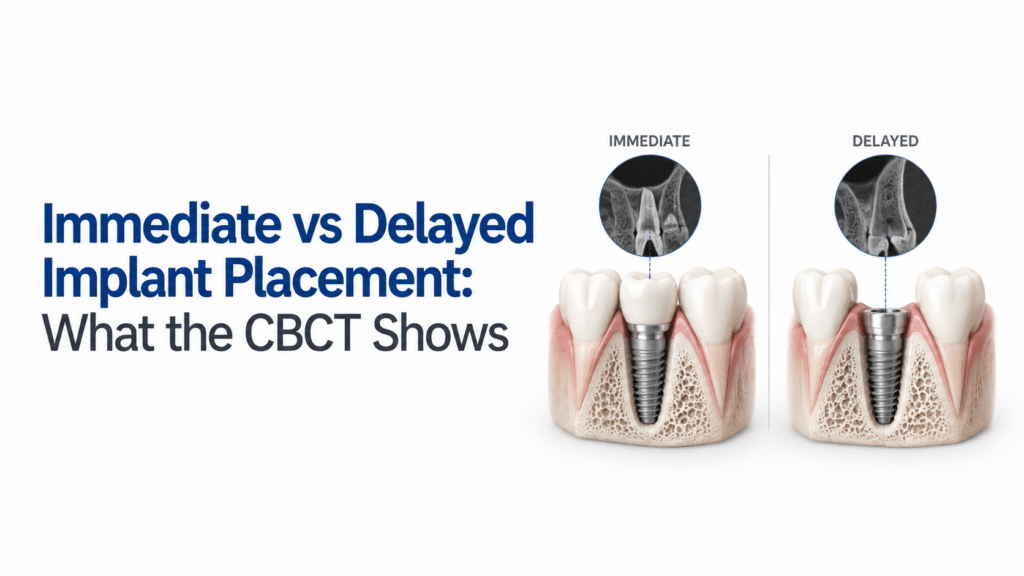
- Immediate implant placement
- Guided flapless implant surgery
discover how customized digital planning can support your implant workflow.
Explore Custom Surgical Guides for Implants – Nidaan UniGuide to learn how patient-specific guides are designed from CBCT and intraoral scan data for precise, prosthetically driven implant placement.
If you’re a dentist or patient looking for advanced implant planning support, you can also visit one of Nidaan’s dedicated dental imaging centres in Pune for CBCT imaging, digital implant planning, and customized UniGuide solutions.
Frequently Asked Questions (FAQs)
What is a dental surgical guide for implants?
A dental surgical guide is a customized template designed specifically for a patient’s mouth to help dentists place dental implants according to a digitally planned position. It is created using CBCT imaging, intraoral scans, and implant planning software to guide the drilling path, implant angle, depth, and entry point during surgery.
Rather than replacing surgical expertise, the guide helps transfer the virtual treatment plan accurately into the clinical procedure, improving placement precision and restorative planning.
How is a dental implant surgical guide made?
The process begins with collecting detailed diagnostic information, including a CBCT scan and, in many cases, an intraoral digital scan.
The typical workflow includes:
- CBCT imaging to evaluate bone anatomy and vital structures.
- Intraoral scanning to capture teeth and soft tissue.
- Virtual implant planning based on the desired final crown position.
- Digital design of the surgical guide.
- Precision manufacturing using 3D printing or CAD/CAM milling.
- Clinical verification before implant surgery.
At Nidaan UniGuide, this workflow combines CBCT-based planning, radiologist support, digital design, and precision manufacturing to produce patient-specific surgical guides.
Does guided implant surgery guarantee implant success?
No. A surgical guide improves the accuracy and predictability of implant placement, but it does not guarantee that an implant will succeed.
Long-term implant success depends on many factors, including:
- Proper diagnosis
- Bone quality and quantity
- Patient health
- Surgical technique
- Prosthetic planning
- Oral hygiene
- Regular maintenance and follow-up
Current scientific evidence consistently supports improved implant positioning with guided surgery, but implant survival remains dependent on comprehensive clinical care rather than the guide alone.
What are the advantages of guided implant surgery compared with freehand implant placement?
Guided implant surgery offers several planning and restorative advantages.
These include:
- More accurate implant positioning
- Better control of implant angulation
- Improved drilling depth control
- Crown-driven implant placement
- Better alignment for multiple implants
- Enhanced communication between the surgeon, restorative dentist, and dental laboratory
- Improved planning around nerves, adjacent teeth, and the maxillary sinus
These benefits are particularly valuable in complex implant cases where millimetre-level precision is important.
When is a surgical guide most useful for dental implants?
Although surgical guides can be used for many implant procedures, they are especially valuable when precision has a significant influence on treatment planning.
Examples include:
- Multiple implant placement
- Full-mouth rehabilitation
- All-on-4® and full-arch restorations
- Immediate loading protocols
- Front tooth (esthetic zone) implants
- Limited available bone
- Implant placement close to the maxillary sinus
- Cases involving the inferior alveolar nerve
- Digitally planned implant restorations
In these situations, guided surgery helps clinicians transfer complex digital plans accurately into surgery.
Can a surgical guide reduce complications during implant surgery?
A surgical guide can help reduce the likelihood of positioning-related errors by improving implant accuracy and supporting careful planning around important anatomical structures.
However, no surgical guide can eliminate all risks. Implant treatment still requires appropriate diagnosis, careful surgical execution, and sound clinical judgment. Unexpected anatomical findings, patient-specific factors, or biological healing responses may still influence treatment outcomes.
What is the difference between a static surgical guide and dynamic navigation?
A static surgical guide is a physical guide that is fabricated before surgery based on a finalized digital treatment plan. During the procedure, it helps direct the surgical drills according to that predetermined plan.
Dynamic navigation uses real-time computer tracking to guide implant placement during surgery, allowing clinicians to make adjustments while monitoring the implant position on a screen.
Both approaches aim to improve accuracy, but they differ in workflow, equipment requirements, flexibility, and cost.
Why is a CBCT scan required before making a surgical guide?
A CBCT scan provides the three-dimensional anatomical information needed for accurate implant planning.
It allows clinicians to evaluate:
- Bone height and width
- Bone morphology
- Nerve pathways
- Maxillary sinus anatomy
- Adjacent tooth roots
- Available implant space
Without this three-dimensional information, designing a customized surgical guide with the required level of precision would not be possible.
Can every implant be placed using guided surgery?
Not necessarily. Many implant procedures can benefit from guided surgery, but not every case requires it. Straightforward single-implant cases with abundant bone and clear anatomical landmarks may be managed successfully without a fully guided workflow.
Your implant dentist will recommend the most appropriate approach based on:
- Clinical complexity
- Bone availability
- Restorative requirements
- Anatomical considerations
- Overall treatment objectives
Why do many implant dentists use Nidaan UniGuide?
Nidaan UniGuide combines advanced CBCT imaging, digital implant planning, radiologist support, and precision 3D manufacturing into a single workflow designed for implant dentistry. Each guide is customized to the patient’s anatomy and treatment plan, helping clinicians transfer digital planning accurately into surgery. The workflow also integrates with intraoral scans and leading implant systems, supporting efficient planning and prosthetically driven implant placement.