
Guided Implantology The Promise of Nidaan UniGuide

Developer
September 17, 2025
Introduction
Implant dentistry has revolutionized oral care by offering patients predictable and long-lasting replacements for missing teeth. But for decades, implant placement relied heavily on freehand techniques, demanding high surgical skill while leaving room for variability and complications.
Enter guided implantology — a game-changer that combines CBCT imaging, digital workflows, and custom 3D-printed surgical guides to achieve unparalleled precision.
At the forefront of this transformation is Nidaan UniGuide, a customized implant surgical guide that transforms complex procedures into predictable, efficient, and patient-friendly surgeries.
This blog explores why Nidaan UniGuide stands as the future of guided implant surgery in Pune and India, what makes it more accurate than freehand placement, and how it empowers both clinicians and patients.
The Need for Guided Implantology
Challenges of Freehand Implant Placement
Traditional implant surgeries present several limitations
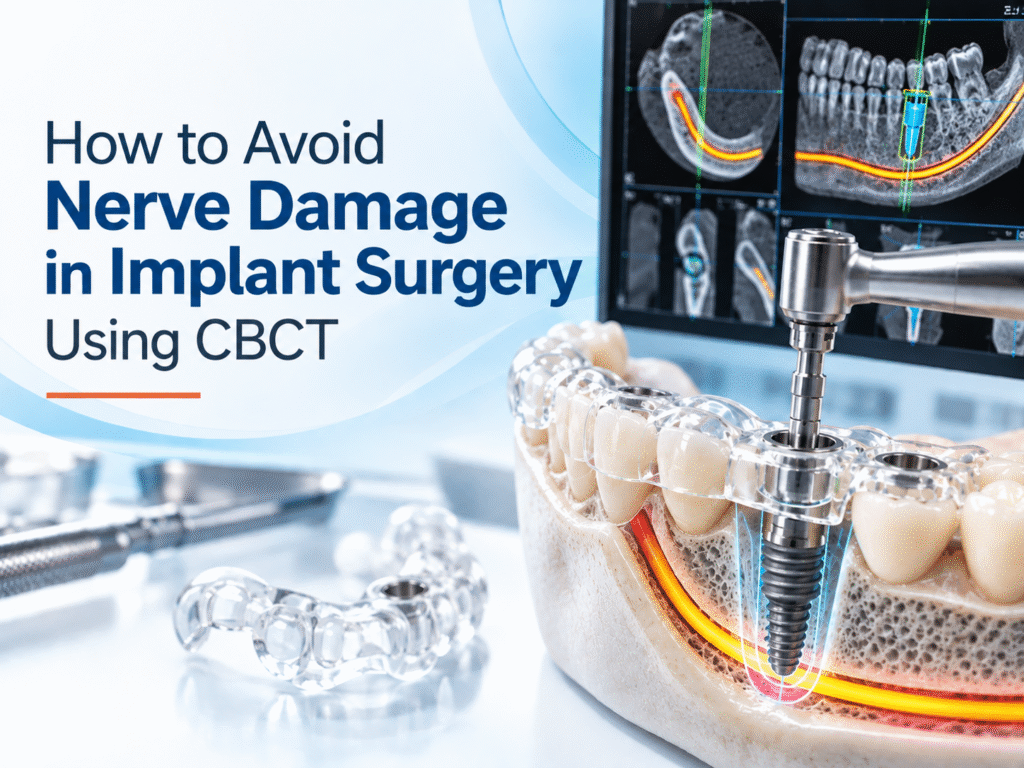
- Risk of nerve injury or sinus perforation.
- Inaccurate angulation leading to implant failure.
- Greater patient trauma requiring longer healing times.
- Prolonged surgical chair time, increasing fatigue for both dentist and patient.
Why Precision Matters
A misplaced implant by even a millimeter can cause long-term complications. Predictable implantology requires 3D assessment of bone volume, density, and angulation — all of which guided surgery provides flawlessly.
What Makes Nidaan UniGuide Different?
Custom, Precise, and Clinically Validated
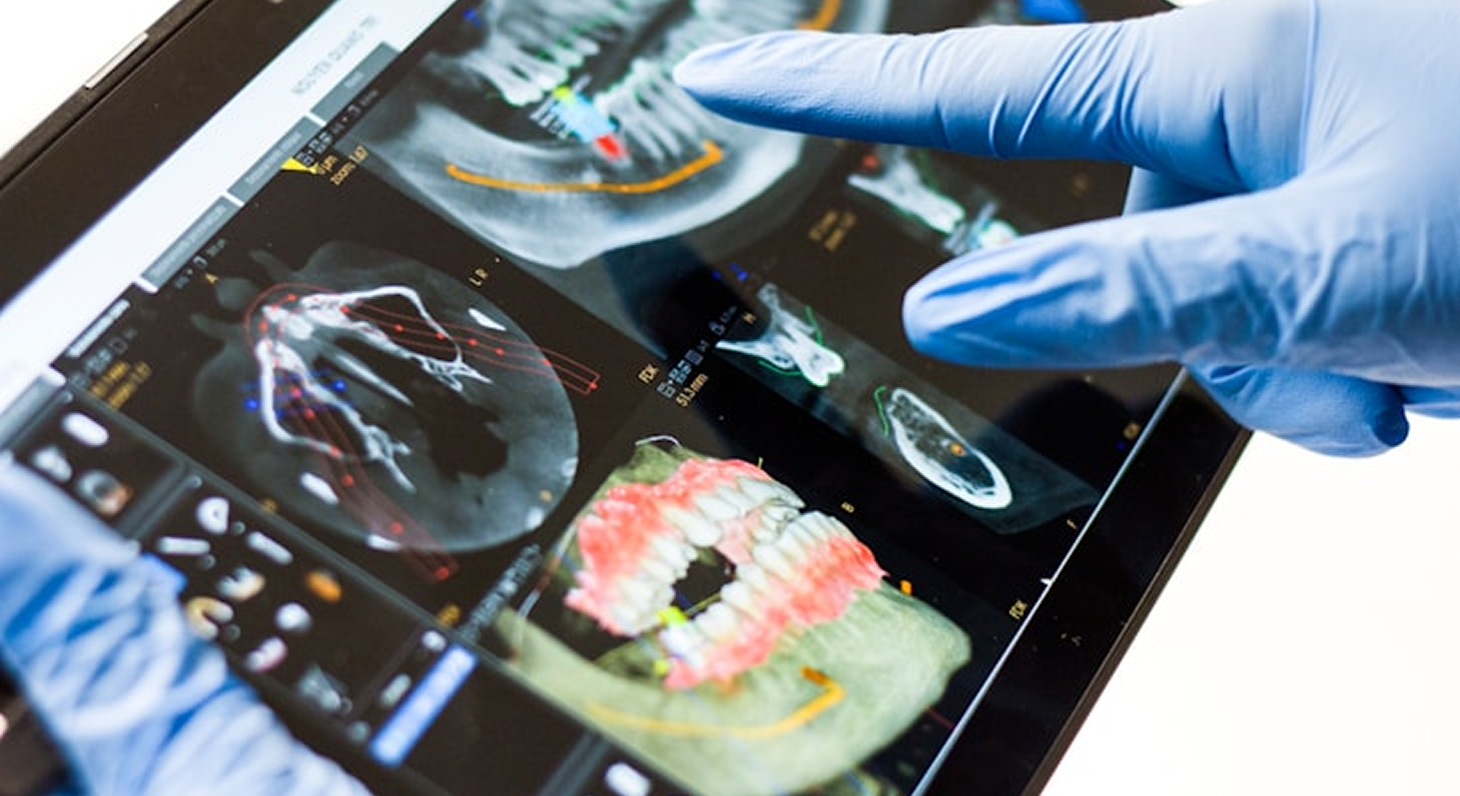
Unlike generic surgical guides, Nidaan UniGuide is engineered from patient-specific CBCT data and intraoral scans. Each guide is custom designed, reviewed by radiologists, and 3D printed with exact fit, ensuring every implant procedure is uniquely tailored.
Seamlessly Integrated Workflows
From scan acquisition to design confirmation and final delivery, Nidaan ensures a streamlined workflow between clinic and radiology center — making UniGuide easy to adopt for practices of all sizes.
The Nidaan UniGuide Workflow
Step 1 – Dental Clinic Data Preparation
- CBCT scan + intraoral scan / dental models.
- Data securely transferred to Nidaan radiologists.
Step 2 – Nidaan Planning & UniGuide Design
- Implant position digitally planned using CBCT.
- Customized guide designed for accuracy.
Step 3 – Clinic Reviewing the Plan
- Dentist confirms design virtually.
- Adjustments incorporated before 3D printing.
Step 4 – Nidaan UniGuide 3D Printing
- Surgical guide 3D-printed with biocompatible resin.
- Validated for precision and fit.
Step 5 – Clinic Delivery + Guided Surgery Drill Kit
- Delivered with compatible drill kit.
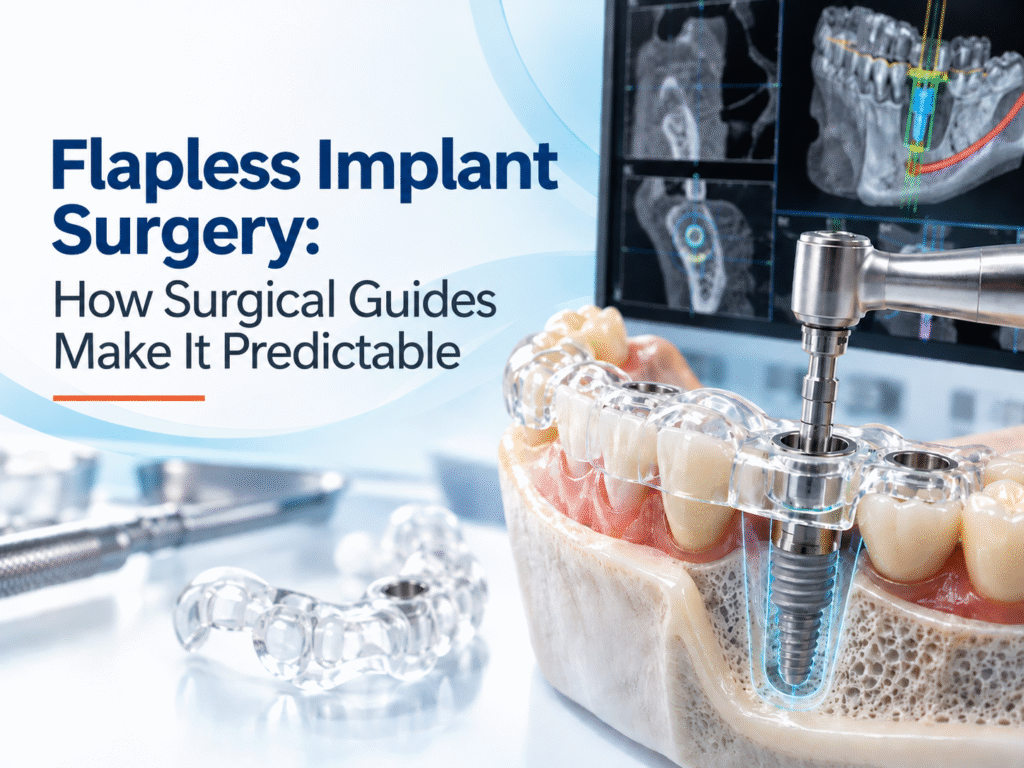
- Enables minimally invasive, flapless guided surgery.
Why Dentists Choose Nidaan UniGuide
Key Benefits for Dentists
- Pinpoint Accuracy – Predictable implant placement every time.
- Reduced Surgery Time – Faster chair-side performance.
- Fewer Complications – Lower surgical errors, better recovery.
- Integrative Workflow – Compatible with most implant systems.
Key Benefits for Patients
- Minimally Invasive Procedures – Reduced pain and trauma.
- Faster Healing – Flapless surgery accelerates recovery.
- Improved Long-Term Success – Perfect placement results in lasting implants.
The Future of Implantology with Nidaan
Where Digital Dentistry Meets AI
Nidaan is already combining UniGuide workflows with AI-driven diagnostics from CBCT data. Future integration will allow even greater precision, enabling smart implants and autonomous clinical workflows.
India’s Role in Implantology Innovation
With its dental expertise and strong patient base, India is poised to lead in guided implantology adoption. Nidaan UniGuide places Pune at the center of this global dental revolution.
Case Examples of Nidaan UniGuide Success
Case 1: Flapless Single Implant Surgery
Patient benefited from UniGuide-assisted minimally invasive placement, recovering in half the expected time.
Case 2: Complex Multi-Implant Planning
CBCT-based UniGuide helped prevent sinus perforation and ensured parallel alignment of multiple implants.
Case 3: Predictive Outcomes in Atrophic Jaw Case
Guide-enabled precise angulation allowed for implant success where traditional planning would risk failure.
Conclusion
Guided implantology isn’t the future anymore — it’s here. With Nidaan UniGuide, dentists gain confidence, patients receive safer care, and implantology achieves the precision it always deserved.
For 40 years, Nidaan has led dental innovation in Pune. With UniGuide, we continue this legacy — making guided implantology the standard of care in India.
FAQs – Guided Implantology at Nidaan
Q1. What is guided implantology and how does UniGuide help?
Guided implantology uses custom surgical guides created from CBCT data to ensure precise implant placement. UniGuide minimizes risks, improves outcomes, and saves time.
Q2. Is guided surgery safer than freehand implant surgery?
Yes. Guided surgery reduces risks of nerve damage, sinus perforation, and angulation errors. It also supports flapless surgery, improving patient recovery.
Q3. Do I need special training to use UniGuide?
No. UniGuide is practice-friendly and comes with radiologist support from Nidaan, making it easy for dentists to adopt without additional training.
Q4. How long does it take to receive a UniGuide?
Typically, within a few business days after the CBCT scan and design confirmation, a 3D-printed UniGuide with drill kit is delivered to the clinic.
Q5. Why choose Nidaan for guided implantology?
With 40 years of imaging expertise, 700+ dentist partnerships, and advanced CBCT technology, Nidaan ensures UniGuide offers unmatched reliability and precision in India.